

United States of American( USA )
Mon, Tue, Fri, Sat, Sun
Doctors Onboard: 8
24/7 available


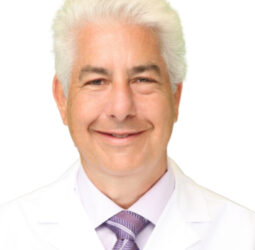
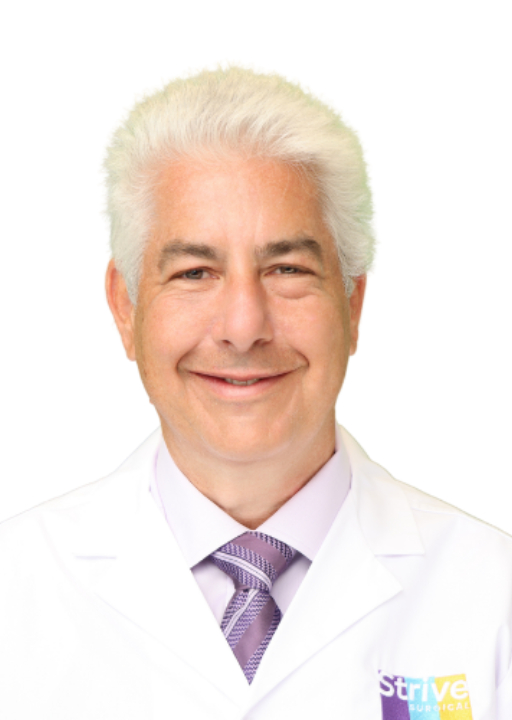
Shawn M. Garber, MD, FACS, FASMBS founded Strive Surgical on a conviction that has less to do with the operating room than most people expect: that the entire experience should be seamless. From your first phone call to the day you’re back to normal, someone should be with you — and nothing should be left for you to figure out alone. He has spent 26 years proving it out.
Dr. Garber trained in one of the first advanced laparoscopic surgery fellowships in the country, at George Washington University Medical Center, when minimally invasive technique was still proving itself. He performed the first laparoscopic gastric bypass on Long Island, helped develop single-incision approaches that leave virtually no scar, and now teaches those techniques to surgeons nationwide. The practice he built around that work, New York Bariatric Group, has treated more than 45,000 patients across 27 locations and three surgery centers of its own — a volume that matters less as a number than as a discipline. High-volume, specialized teams doing the same procedures every day get better at them, and that consistency is where excellent outcomes actually come from.


















Shawn M. Garber, MD, FACS, FASMBS founded Strive Surgical on a conviction that has less to do with the operating room than most people expect: that the entire experience should be seamless. From your first phone call to the day you’re back to normal, someone should be with you — and nothing should be left for you to figure out alone. He has spent 26 years proving it out.
Dr. Garber trained in one of the first advanced laparoscopic surgery fellowships in the country, at George Washington University Medical Center, when minimally invasive technique was still proving itself. He performed the first laparoscopic gastric bypass on Long Island, helped develop single-incision approaches that leave virtually no scar, and now teaches those techniques to surgeons nationwide. The practice he built around that work, New York Bariatric Group, has treated more than 45,000 patients across 27 locations and three surgery centers of its own — a volume that matters less as a number than as a discipline. High-volume, specialized teams doing the same procedures every day get better at them, and that consistency is where excellent outcomes actually come from.



“Shawn M. Garber, MD, FACS, FASMBS” Answers